Nuffnang Add

Showing posts with label van. Show all posts

Tuesday, March 22, 2016

Nissan e-NV200 Concept


We first featured Nissan’s ambitious plan to make a black cab for the UK earlier this year, including details of a zero-emissions electric version.


Now, a year before trials of that get underway in London, we’ve been behind the wheel of the electric van it’ll be based on.


The standard Nissan cab is due in 2013, but the EV version, the e-NV200, is more interesting. The drive train is based on the Leaf, with an 80kW (108bhp) electric motor generating 280Nm of torque.


Lithium-ion batteries are stored under the floor, which allows for a traditional taxi layout: cabs will have a forward-facing three-seat bench and two rear-facing flip-down chairs. Access is excellent, thanks to the two sliding side doors – safer for pedestrians and cyclists when opened from inside – and the blue-tinted Nissan bonnet badge hides the charging socket.


Behind the wheel, the e-NV200 is similar to the Leaf. On the road there’s an audible whine which gets louder as speed increases, but acceleration is smooth and brisk. Cabbies will also be thrilled to know the taxi will have the necessary 25ft turning circle when it arrives in London.


A 100-mile range seems limited, but Nissan expects cabbies to plug in overnight, quick-charge over lunch (it’s 80 per cent charged in 30 minutes) then return to work. Whether that works in practice will be a key factor in its success.


Key specs
Price: £30,000 (est)
Engine: 80kW electric motor
Power: 108bhp
Transmission: Single-speed automatic, front-wheel drive
0-62mph: 13.0 seconds (est)
Top speed: 90mph (est)
Range: 100 miles (est)
Equipment: Air-con, sat-nav
On sale: 2014

Nissan NV200 Taxi Of The Future


Nissan has come up with a new take on the iconic London black cab, and is aiming to have it on UK roads by 2014.


The car is based on the NV200 that’s already been accepted as New York’s taxi of the future. And the company says it’ll live up to the legend of the traditional cab – the latest version of which, the LTI TX4, is showing its age with its ladderframe chassis and inefficient diesel.


Converting the NV200 for use in the capital isn’t simply a case of painting it black and fixing a taxi light on the roof, though. Vehicles must meet a host of Transport for London legal requirements.


One of these relates to headroom, and was originally introduced to enable passengers to wear a top hat in the back. As you can see from our pictures, the Nissan passes the test.


The most crucial requirement is a 25ft turning circle – allegedly so that cab drivers can make it around the roundabout at the Savoy hotel in one go. To allow this, Nissan had to add 200mm overall to the front track, plus fit new suspension, so the NV200 really can ‘turn on a sixpence’.


There’s also a law that limits the location of the indicators in relation to the width of the vehicle. Because of the new wheelarches, the indicators had to be moved from the light cluster down to the front apron.


Once Nissan had taken care of the 70-plus legal requirements – including fitting a slip-resistant floor and bright sight patches on the seats – it set about making the NV200 passenger-friendly.


All cars have a panoramic sunroof for sight-seeing, plus USB sockets and seats that move back and forth to give more passenger or luggage space. Sliding rear doors not only boost access for wheelchair users, but also stop people opening doors into traffic.


The most convincing arguments for switching to the new NV200 are environmental and financial, though. The 1.5-litre diesel – sourced from the Juke – offers 88bhp or 109bhp and promises 53.3mpg economy and 139g/km emissions. The TX4 claims 35.3mpg and 209g/km.


If all London cabbies switched to an NV200, it would save more than 39,000 metric tonnes of CO2 a year, while drivers would cut their fuel bills by around £700 annually. Plus, Nissan even has an electric version under development for 2014.


A price hasn’t been decided yet, but the standard NV200 is likely to cost between £28,000 and £32,000. That’s cheaper than the TX4 and Mercedes’ Vito taxi – and the new car costs less to run than both.


Taxi drivers may be a tough bunch to please, but Nissan is working closely with them to ensure the NV200 ticks all the boxes. And although the new car doesn’t have the iconic looks of the classic black cab, it seems a good fit for modern London and a strong financial proposition for cabbies. When you’re hailing a taxi in 2014, there’s a pretty good chance it’ll be a Nissan.

BatMan BatVan!


Batvan a Custom Van for batman vehicle, a japanese modificator modify their van into a cool looking bat vans. Batman obsession is nothing new to anyone of us. The freaks out there, every now and then, come up with Batmobiles or lego creations that bind people with Batman obsession. Similar is the case in Japan where you can see those outrageously modified old diesel Batvans roaming in the streets.


The custom van culture may have originated in America in 70s, but it’s as young in Japan as ever. And the Batvan pictured above is the result of one van owner’s decision to mix a serious love of Batman with Japan’s extreme custom van culture. If you are also one of those who love everything Batman, you can find many of them here. But we have exclusively selected this one.


This Batvan features big fiberglass wings and body kit mixed with the Batman theme that gives the impression of something that looks more like animation then the real world. The bat van has interesting details like its paint job is the most herculean task someone has taken but it’s been meticulously completed.


The batvan travels with a scale replica of itself and a life sized Batman statue. But one wonders if it’s safe to drive on highways with such wide wings. On the other, the custom built Batvan doesn’t look durable and while added with 8000 pounds of fiberglass body it can’t be as fast as the Bat Pod.

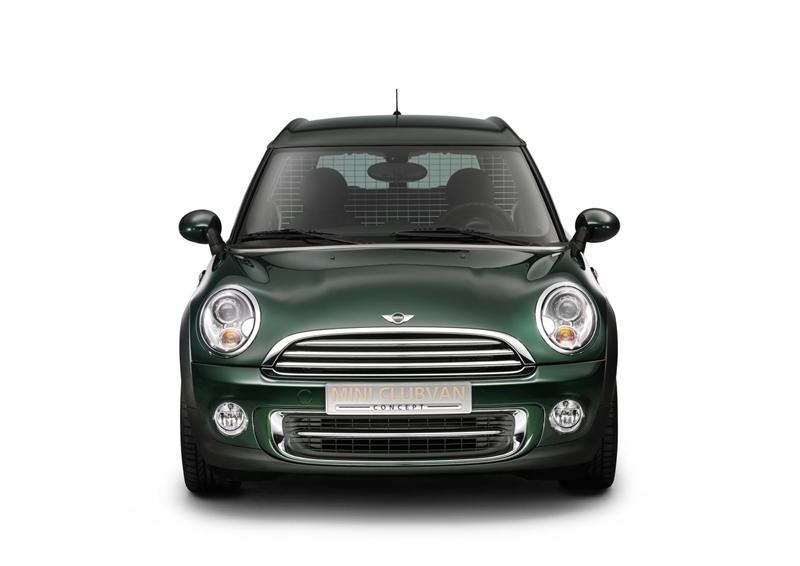
Mini ClubVAN?


MINI looks set to expand into the burgeoning commercial vehicle market with a new cargo hauler, following the reveal of its latest concept car.


Called the Clubvan, MINI’s new concept for the upcoming 2012 Geneva Motor Show is what you get when you take an ordinary Clubman, black out the rear windows and remove the rear seats.


MINI describes it as a compact lifestyle van for business or leisure, and you can certainly imagine small scale delivery services such as florists or pizza businesses using the cute vehicles as a promotional tool.


In total there are two seats, five doors, and a practical load area that reaches from the split rear doors right up to the partition grille behind the two seats. The totally level floor makes full use of the interior’s depth, and that allows the concept to offer more storage space than the Clubman on which it’s based.


MINI will be using the Clubvan’s Geneva appearance to gauge public interest in the vehicle, and if the production green light is given then we wouldn’t be surprised if an all-electric version is launched further down the track to lure small businesses looking to curb ever-increasing gas bills.


Note, the Clubvan is just one additional model MINI is considering. As we reported just last week, three new all-new MINIs are due by the end of the decade, potentially including, in addition to this van variant, a station wagon and sedan.

Wednesday, February 24, 2016

Citroen Tubik?


It's a van – but not as we know it. This amazing Citroen concept reinvents one of the firm’s most famous commercial vehicles.

Called the Tubik, it draws inspiration from the TUB and the Type H – which featured a pronounced nose, corrugated body panels and sliding doors. The Type H was produced between the Forties and Eighties, and was one of the simplest and most versatile vans in history. A total of 473,000 models were sold.


The Tubik takes those themes and adapts them for the 21st century, with seating for up to nine and an eco-friendly diesel hybrid powerplant.

As with the Type H, it has a nose that stands apart from the main body, while the windscreen pillars are reminiscent of the Type H’s two characteristic ridges. Concept car touches include a bold grille – as seen on the likes of the 2009 Revolte – plus 22-inch wheels and a mix of metallic grey paint for the bodywork and contrasting white at either end.


A door at the front gives access to the driving compartment, while the whole side of the vehicle lifts upwards to allow entry to the cabin.

In the back is a ‘lounge-style cocoon’ featuring felt seats, silk backrests and door panels, and a leather floor. At 4.8 metres long, the Tubik matches the Renault Grand Espace, but it’s far wider and taller. The nine-seat layout comprises individual chairs that can be arranged with occupants sitting one behind the other, face-to-face or semi-reclined.


Up front, the driver gets a black leather seat and starts the car via a fingerprint recognition system. There is also a head-up display screen and all-round parking cameras. Power comes from PSA Peugeot-Citroen’s HYbrid4 drivetrain, which uses a diesel engine to drive the front wheels and an electric motor for the rears.

Hydractive suspension automatically lowers the car at high speeds to improve aerodynamics and reduce fuel consumption. The Tubik isn’t set to go into production, but the ideas behind it could influence forthcoming large Citroens.
Related Posts Plugin for WordPress, Blogger...