Nuffnang Add

Showing posts with label CO2. Show all posts

Thursday, March 24, 2016

Renault Captur


Unveiled in February 2011, Captur is the new concept car embodying Renault’s new design strategy. A sporty crossover with a flowing and athletic body language, it conjures up visions of two people exploring the world and previews a forthcoming road car. Its Energy dCi 160 twin-turbo engine-concept combines fun driving, enjoyable performance and low CO2 emissions.


Little of what makes up the interior will ever follow through to a production model, but the spacious feel and high driving position reveal why Renault is so keen to introduce a car into this segment. The Captur features a futuristic sat-nav, called VisioDrive. This projects navigation information on to real-life pictures of the road ahead, transmitted to the cabin by forward-facing cameras.


In addition, the newcomer boasts a hi-tech powertrain – or at least, it should! Renault envisages the Captur will eventually feature a twin-turbocharged 158bhp 1.6-litre dCi engine. We have tried the 128bhp single-turbo version of this motor, and with a broad range of torque and smooth running, it will be perfect for cars of this size.


Officially, the firm claims the Captur will be able to cover 0-62mph in eight seconds while emitting only 99g/km of CO2. And although the car is front-wheel drive only, Renault’s innovative RX2 system – which can apportion power to either of the driven wheels if one loses grip – should help with off-roading.


From behind the wheel, the Captur feels like a one-off concept. A lack of sound deadening means a huge amount of engine noise, while the suspension is very firm. But none of this matters, as it has no bearing on how the final car will handle.

Tuesday, March 22, 2016

Peugeot 2008


Peugeot has officially revealed the 2008 "urban crossover" which will get its public debut at Geneva Motor Show in March.


Set to tackle the Nissan Juke, Peugeot's new small crossover is based on the 208 supermini and measures 4160mm which makes it 25mm longer than the Juke.


Design-wise, its styling is heavily influenced by the 208 especially if we look at the front grille and front/rear lights. In typical crossover fashion, the ride height and driving position are slightly raised, while a somewhat more rugged bodykit has been applied.


Riding on 17-inch alloy wheels, the 2013 Peugeot 2008 will be sold exclusively with a FWD layout but some sort of off-road capabilities will be available via a "Grip Control" traction system, the same one found in the larger 3008.


The engine lineup will be borrowed from the 208, along with a new 3-cylinder, 1.2-liter turbocharged gasoline unit. Peugeot will also offer more frugal 1.4- and 1.6-liter e-HDI diesels. The most economical version will have CO2 emissions of 99 g/km.
Full details will be available in March 2013.

Toyota FT-Bh


Toyota is exploring how far it can push the boundaries of fuel efficiency with a car that previews the next-generation Yaris. 


The company has revealed the FT-Bh concept, and advanced vehicles project manager Koji Makino told: “I hate exotic materials. Do you buy your Yaris or Aygo in carbon fibre? No: these materials make cars too expensive.”


Extremely low weight, great aerodynamics and a hybrid engine allow this four-seater to claim 134.5mpg and 49g/km CO2 emissions. Add plug-in capability and the CO2 figure drops to only 19g/km.


The production FT-Bh has a proposed retail price of £15,000 and will be made of steel. The target weight is 768kg – that’s 270kg less than a Yaris – and the 1.0-litre, two-cylinder petrol engine weighs only 60kg.


The engine drives a compact version of the new Yaris hybrid’s petrol-electric system, but with an advanced lithium-ion battery. The aerodynamic body has a drag coefficient of 0.235. Cameras replace the mirrors, there are no regular door handles, plus the car has small, efficient air intakes and an aerodynamic rear undertray.


Inside, the FT-Bh is heavily insulated to reduce the energy required to heat up and cool down the cabin. Half the trim is made of plant materials, while the other half is man-made. “Less interior, less thermal capacity, so less to heat up and cool down,” said Makino.


Heat management is a key part of the FT-Bh’s technology. It maintains cabin temperatures with heat-reflective glass and matt white heat-reflective paint.


Even the dashboard is minimised to reduce weight and electricity consumption: it uses an LED-style display made of electrically conductive paper. “As we can’t reduce the weight of the driver, we have to reduce the weight of everything else,” added Makino.

Wednesday, February 24, 2016

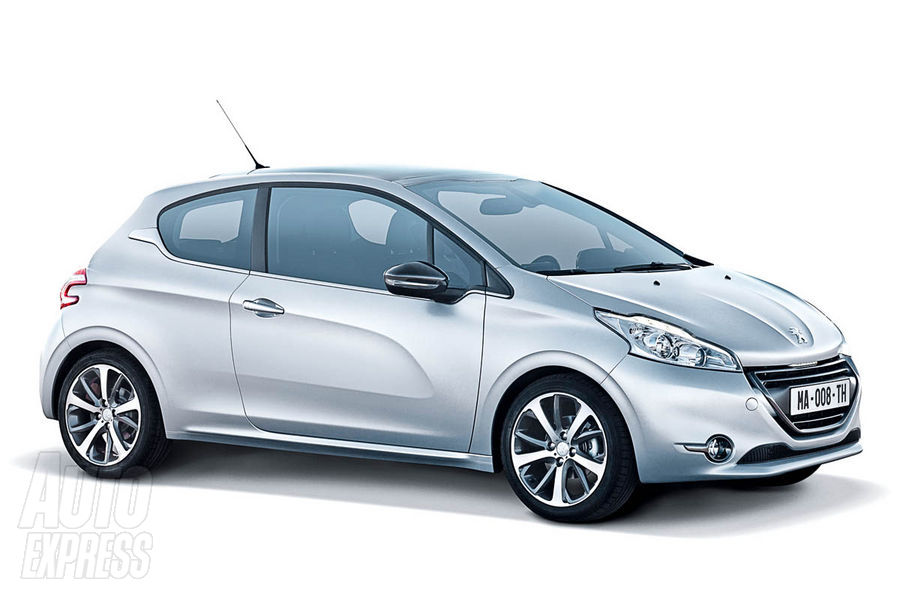
New Peugeot 208


In spite of Peugeot’s rich history in the small car market, the 208 is the company’s most radical reinvention of the supermini ever. 

The new car is smaller, lighter, cleaner and more stylish than the 207, bringing improvements in every possible way. And we have the first official pictures and 
all the details that matter.


Since the SR1 concept debuted at the 2010 Geneva Motor Show, Peugeot has set about pursuing a new design direction, improving quality and reintroducing the sporty driving experience of old back into its products. And the clean sheet approach to the 208 is the culmination of that process.

Although the three and five-door are based on the same mechanicals, they have been designed from the outset as separate entities. In profile, 
the scallop taken from the side of the three-door begins at the tail-lights and curves down along the side of the car.


The five-door uses a less dramatic feature line that runs along the sill and turns upwards behind the front wheel.

Other differences include bars in the three-door’s grille – the five-door gets mesh – and a continuation of the chrome 
window trim into the C-pillar, which is a nod to the 205. 


Both cars get the floating grille treatment already seen on the 508, as well 
as foglamps set flush into the 
front bumper and boomerang rear lights complete with 
claw-like graphics.

Inside, the revolution continues. A large central touchscreen dominates the 
interior on all but the entry-level 208. This controls the 
entertainment and navigation functions, plus the vehicle dynamics. Owners wanting to personalise their car can get the screen trimmed in different ‘skins’. 


So it’s no surprise that the 
layout and materials bear no resemblance to the past, with a glossy finish on the console and soft-touch materials throughout. The steering wheel has shrunk, too, and you view the instrument cluster over the top of it, instead of through it, which Peugeot says helps drivers focus on the road.

It’s not only the steering wheel that’s smaller, either – the whole car is. It’s 7cm shorter and 1cm lower, but the wheelbase is the same as the 207’s. Incredibly, the cabin is more spacious, with 5cm extra legroom, plus the boot is 15 litres bigger, at 285 litres – that’s still 10 litres less than in a Ford Fiesta.


The more compact dimensions mean dramatic weight savings. On average, the 208 is 110kg lighter than the 207, with the base car weighing only 975kg. Plus, the shape, optimised in the wind 
tunnel, is more aerodynamic than ever – and fuel economy 
will be impressive as a result.

Full engine details have yet to be released, but CO2 emissions have fallen by 34g/km on average compared to the 207. And none of the five diesels, which range from 89bhp to 108bhp, emits more than 99g/km.

Honda Civic 9th generation


New Honda Civic revealed. Honda gives ninth-generation family model bolder, evolutionary look and promises car is better to drive than ever.


Cheaper to run, more comfortable and better to drive – that’s the new Honda Civic. The compact family car has been thoroughly overhauled in order to keep pace with the all-new top-value rivals.


The ninth-generation Civic is slightly longer, wider and lower than the model it replaces, with the same space inside. Yet there’s no huge visual leap.


“We had a very positive reaction to the current car, so we’ve enhanced and improved aerodynamics to boost economy and reduce CO2,” explained Takehiko Masuda, assistant large project leader – body design.


Styling changes include a prominent nose with LED running lamps and new plastic trim, more dramatically curved arches, and a rear LED light bar which doubles as a spoiler. This has been moved down 20mm to improve visibility out of the split back screen, while there’s a wiper for the first time.


Input from ex-Honda Formula One aero engineers sees the inclusion of small fillets above the rear arches to improve airflow, an active grille shutter and an enclosed chassis. These make the Civic the most aerodynamic car in its class, with a drag coefficient of only 0.27 – around 10 per cent better than before. As well as reducing wind noise, this has efficiency benefits. Plus, all the engines have stop-start, and are much cleaner and cheaper to run.


The updated 2.2-litre i-DTEC diesel has a 10bhp power hike, to 148bhp. Yet it puts out only 110g/km of CO2. That’s down from 135g/km, and means road tax is free for the first year and £20 annually thereafter.


The 1.8-litre i-VTEC petrol unit jumps from 138bhp to 140bhp, while emissions have fallen from 157g/km to 138g/km. An entry-level 1.4 petrol will also be available, although there is no plan to offer a hybrid. All engines get six-speed manual boxes, with the option of a five-ratio auto for the 1.8 petrol.


Better-quality materials are the highlight of the overhauled cabin. The dash design will be familiar to existing owners, with a separate digital speedo and ‘driver information zone’.

Standard spec will include driver, passenger, curtain and side airbags, plus an ECON button which puts the car in a frugal driving mode. Options include a collision-mitigation system – which brakes the car at low speeds if it senses an accident – plus adaptive cruise control. But Honda’s lane departure warning system has not proven popular with owners, so won’t be offered.


Under the skin, the Civic uses an updated version of the current car’s front-wheel-drive platform. That means the fuel tank is still mounted under the front seats. This combines with the compact torsion beam back suspension to give plenty of rear space, plus a twin-height boot floor. Versatility is boosted further by back seats that flip up cinema-style or fold flat. Honda has done extensive testing on UK roads in a bid to improve ride comfort without sacrificing steering precision.

The front subframe has been changed for a stiffer unit, and the rear suspension gets new fluid-filled bushes to boost refinement.
Related Posts Plugin for WordPress, Blogger...