Nuffnang Add

Showing posts with label 208. Show all posts

Thursday, March 24, 2016

Peugeot New Pride 2012

Coupé


After the conventional
three-door and five-door 208 hatches are launched, the
firm will introduce a dramatic coupé that will slot into the range as a baby brother to
the Audi TT-rivalling RCZ.


The new car continues
the trend set by the 508 and 208 in establishing Peugeot’s
latest design language. It’s the work of styling chief Gilles Vidal and PSA Peugeot-Citroen design boss Jean-Pierre Ploué, who have sought to bring back simple, elegant lines
to the brand’s cars.


The idea is to replace the swollen metalwork and gaping grilles of current Peugeots, and re-establish the firm as
a design leader. The Coupé will feature the rakish, feline design cues of the SR1
concept seen at last year’s Geneva Motor Show. Swept-back headlights, sculpted flanks and an elegant tail will be incorporated into the shape.


To match the striking looks, the car will be sharp to drive. The Coupé uses the 208’s front-wheel-drive platform, but gets bespoke settings for the steering and suspension. What’s more, as with the RCZ and 508, the top-spec model will feature a more advanced front suspension set-up that tames torque steer and gives greater steering sharpness.

Power will come from a
line-up of small turbocharged engines, including the 1.6-litre petrol unit found in the RCZ. The Coupé is currently slated to arrive in summer 2013.


Roadster


Following the Coupé, Peugeot is evaluating a 208 Roadster that would take the fight to MINI’s imminent two-seater cabrio. This fabric-roofed model wouldn’t replace the folding hard-top CC – that model has been part of Peugeot’s range since the 206, and will be offered in a 208.

Instead, the Roadster will be aimed at those wanting a mix of wind-in-the-hair thrills and a purer driving experience. That will allow the 208 CC to be sold as a luxurious junior tourer, with high-spec interior, sophisticated multimedia set-up and the option of a twin-clutch gearbox.

Powering the roadster will be the 1.6-litre petrol turbo engine, allowing Peugeot to market it as a spiritual successor to the legendary 205 GTi convertible. Low weight will be central to the car’s appeal: it will get a canvas top and a more spartan interior to shave kilos and help achieve a sparkling driving experience.

The Roadster is expected to match the MINI for pace – the two will share an engine, after all – but should undercut it on price when it arrives in 2014.


SUV


Also breaking new ground for Peugeot is a junior SUV that takes its inspiration from the HR1 unveiled at last year’s Paris Motor Show.

The newcomer is set to be a rival to Nissan’s Juke, and Peugeot may co-develop the car with Mitsubishi. The 4007 was spun from the Japanese firm’s Outlander, while a new, smaller Peugeot model is currently being developed from Mitsubishi’s ASX.

As with the HR1, a hybrid drivetrain is possible, as is a three-cylinder 1.2-litre turbo petrol engine.

Tuesday, March 22, 2016

Peugeot 2008


Peugeot has officially revealed the 2008 "urban crossover" which will get its public debut at Geneva Motor Show in March.


Set to tackle the Nissan Juke, Peugeot's new small crossover is based on the 208 supermini and measures 4160mm which makes it 25mm longer than the Juke.


Design-wise, its styling is heavily influenced by the 208 especially if we look at the front grille and front/rear lights. In typical crossover fashion, the ride height and driving position are slightly raised, while a somewhat more rugged bodykit has been applied.


Riding on 17-inch alloy wheels, the 2013 Peugeot 2008 will be sold exclusively with a FWD layout but some sort of off-road capabilities will be available via a "Grip Control" traction system, the same one found in the larger 3008.


The engine lineup will be borrowed from the 208, along with a new 3-cylinder, 1.2-liter turbocharged gasoline unit. Peugeot will also offer more frugal 1.4- and 1.6-liter e-HDI diesels. The most economical version will have CO2 emissions of 99 g/km.
Full details will be available in March 2013.

Thursday, February 25, 2016

Peugeot 208 GTi


Peugeot has been saving the GTi badge for something special since the underwhelming 207 GTi was discontinued in the market in 2009.


Finally, the company reckons it has produced a car worthy of the badge in the shape of this 208 GTi Concept, which is set to be unveiled at next month’s Geneva Motor Show.


There’s no doubt where the inspiration for the hot 208 has come from. The GTi badge is proudly displayed on the rear quarter panels – just as it was on the legendary 205 GTi hot hatch back in the eighties.


But the retrospective nods to one of Peugeot’s best-loved models end there. A very modern look, with beefy wheelarches, an aggressive front grille and a large rear spoiler is the order of the day. The grille looks like a chequered flag and there’s a pair of chrome exhaust pipes.


The 208 GTi’s engine has already been seen in the RCZ coupe. The 197bhp 1.6-litre turbo petrol will be mated to a six-speed manual gearbox. No performance figures have been released, but expect a 0-62mph time of less than seven seconds.


A special exhaust system gives this engine a burbling note in the RCZ, and a similar set-up will likely be seen in the GTi. Sharp and agile handling should also be expected, as the 208 weighs around 110kg less than the 207.


To improve the GTi’s cornering ability even further, the front and rear tracks have been widened by 36mm and the suspension will be specially modified. The larger-diameter brakes used on the 154bhp 208 1.6 THP model will also fitted to the GTi.


Peugeot has also worked hard to ensure the GTi Concept feels special from behind the wheel. The standard car’s small steering wheel is now trimmed in leather and incorporates a GTi badge plus contrasting red stitching.


The red theme continues in the dial surrounds, the dash inserts and the centre console. The dashboard itself is finished in Alcantara, while the black rooflining and aluminium pedals also add to the classy feel.


For the moment, Peugeot is still calling the 208 GTi a concept car, but we’ve already spotted prototype models being tested on the road. That means you can expect to see the hot 208 on sale by the end of this year.

Peugeot 208 GTi


Peugeot is preparing to unleash a hot GTi version of its new 208 supermini – and the ingredients are right for it to be one of the most exciting Peugeots for years. We have all the details, and our illustrations show how the standard 208 will be transformed.


Like the 205 GTi, which was offered with 105bhp 1.6-litre and 130bhp 1.9-litre engines, the 208 will come with a choice of power outputs.


The tamer version will feature the same 181bhp 1.6-litre turbo engine as the MINI Cooper S, cover the 0-62mph sprint in less than seven seconds and still return almost 50mpg.


The interior will get sports seats and GTi badges, while the exterior will feature bigger alloys, a pumped-up bodykit and larger foglights. At the back, a roof spoiler and twin exhausts finish off the makeover.


The 208 GTi will have plenty of rivals, as the Ford Fiesta ST is due before the end of the year, and there’s an all-new Renaultsport Clio arriving in early 2013. There’s no official release date for the 208 GTi.

Wednesday, February 24, 2016

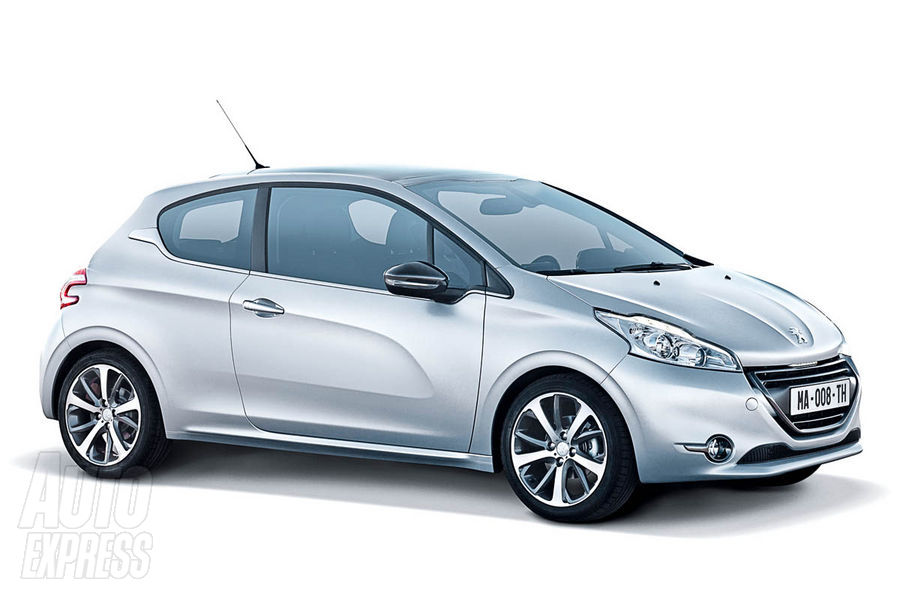
New Peugeot 208


In spite of Peugeot’s rich history in the small car market, the 208 is the company’s most radical reinvention of the supermini ever. 

The new car is smaller, lighter, cleaner and more stylish than the 207, bringing improvements in every possible way. And we have the first official pictures and 
all the details that matter.


Since the SR1 concept debuted at the 2010 Geneva Motor Show, Peugeot has set about pursuing a new design direction, improving quality and reintroducing the sporty driving experience of old back into its products. And the clean sheet approach to the 208 is the culmination of that process.

Although the three and five-door are based on the same mechanicals, they have been designed from the outset as separate entities. In profile, 
the scallop taken from the side of the three-door begins at the tail-lights and curves down along the side of the car.


The five-door uses a less dramatic feature line that runs along the sill and turns upwards behind the front wheel.

Other differences include bars in the three-door’s grille – the five-door gets mesh – and a continuation of the chrome 
window trim into the C-pillar, which is a nod to the 205. 


Both cars get the floating grille treatment already seen on the 508, as well 
as foglamps set flush into the 
front bumper and boomerang rear lights complete with 
claw-like graphics.

Inside, the revolution continues. A large central touchscreen dominates the 
interior on all but the entry-level 208. This controls the 
entertainment and navigation functions, plus the vehicle dynamics. Owners wanting to personalise their car can get the screen trimmed in different ‘skins’. 


So it’s no surprise that the 
layout and materials bear no resemblance to the past, with a glossy finish on the console and soft-touch materials throughout. The steering wheel has shrunk, too, and you view the instrument cluster over the top of it, instead of through it, which Peugeot says helps drivers focus on the road.

It’s not only the steering wheel that’s smaller, either – the whole car is. It’s 7cm shorter and 1cm lower, but the wheelbase is the same as the 207’s. Incredibly, the cabin is more spacious, with 5cm extra legroom, plus the boot is 15 litres bigger, at 285 litres – that’s still 10 litres less than in a Ford Fiesta.


The more compact dimensions mean dramatic weight savings. On average, the 208 is 110kg lighter than the 207, with the base car weighing only 975kg. Plus, the shape, optimised in the wind 
tunnel, is more aerodynamic than ever – and fuel economy 
will be impressive as a result.

Full engine details have yet to be released, but CO2 emissions have fallen by 34g/km on average compared to the 207. And none of the five diesels, which range from 89bhp to 108bhp, emits more than 99g/km.
Related Posts Plugin for WordPress, Blogger...