Nuffnang Add

Showing posts with label new. Show all posts

Thursday, March 31, 2016

Ford Focus 2018


Spy images of a test mule for the next Focus hatchback have also emerged. The all-new rival is set to to arrive on the scene in 2018.


The knock-on effect of the Fiesta supermini's move upmarket is that the Focus, currently criticised for its relative space shortage compared to newer rivals, will grown in size. Although these images show a makeshift body of the current car, the chunkier arches and altered panels prove exterior dimensions will swell.


Expect a modest increase in the wheelbase to allow the Focus to catch up with the VW Golf for legroom, while the current car's small boot should grow significantly. We will also see Ford's latest 'SYNC 3' infotainment system, and a greater emphasis on quality materials.

Thursday, March 24, 2016

2011 VW Beetle, Bigger and Sportier


The Bug is back – but don’t you dare call it cute! An almost unbelievable 73 years since the Beetle made its worldwide debut, Volkswagen has gone for a tougher look for its MkIII model.


To emphasise its global appeal, the striking new car was simultaneously unveiled this week in Shanghai, New York and Berlin. Simply dubbed The Beetle (dropping the ‘New’), this third-generation model moves away from the soft, cutesy styling of the current model. Instead, the new machine gets a much sportier, coupĂ©-like stance, while retaining the original’s classic proportions.


This means the loss of one the car’s most talked-about features: the dash-mounted flower vase! A VW spokesman explained why: “Clearly the current car’s styling was aimed at the feminine side of the market, and the vase didn’t really fit with this model’s sportier appearance.”

The dynamic styling changes are particularly apparent at the back, where the squared-off rear light clusters now sit flush with the boot lip. Meanwhile, on the most powerful turbo petrol versions, a fixed rear spoiler and twin exhausts add an extra dose of aggression to the styling.


However, despite looking more compact thanks to shorter front and rear overhangs and a lower roof, the Beetle is much bigger than before. It is now slightly longer than the Golf, having grown by 152mm. This should address a criticism of the current car by freeing up more space in the cabin and boot; the latter increases from 209 to 310 litres.


At the front, semi-circular LED strips are integrated into the rounded lights, and the steeply raked screen is mounted further back than before. The squared-off bumper, similar to the latest Passat’s, gives the car a much more masculine face, and 19-inch alloys fill the flared wheelarches.

A powerful new range of four turbos backs the beefed-up looks. The petrol line-up comprises a 1.2 TSI 105, 1.4 TSI 160 and 197bhp 2.0-litre, while the diesel is the ultra-efficient 1.6-litre TDI from the Golf BlueMotion, which makes 65.7mpg. Each unit is available with VW’s slick seven-speed DSG gearbox.


The car is claimed to offer genuine driver appeal, with the top-end Sport-badged petrol versions fitted with VW’s torque-vectoring XDS differential as standard. This brakes the inside wheel in tight corners. Inside, quality has been greatly improved. There’s a far more driver-oriented feel, and sporty touches such as the carbon-effect dash and central instrument pod all add to the effect.


Some retro additions feature, though, with the double-layered glovebox instantly recognisable to owners of the air-cooled original. At launch, there will be three simplified trims to choose from: Beetle, Design and Sport. Yet VW claims there will be a wide scope for personalisation whatever the spec, with more revealed closer to the official launch.

We won’t see the Beetle on UK roads until next January, but when the car does arrive, it will sit just below the equivalent Golf in the line-up. Expect prices to range from around £14,000 for smaller-engined Beetles to more than £22,000 for fully loaded Sport models.

Wednesday, March 23, 2016

New London Cab

The old london cab.

It isn’t just Volvo that Geely is reshaping. Here is its interpretation of the black cab’s bulging baby brother! After more than 60 years on its own, the London taxi is to spawn a new range – with the wraps set to come off this radical concept, designed to sit below the TX4, at the Beijing Motor Show.


The current london cab.

The TXN is the first fruit of a link-up between UK cab maker LTI and Chinese car giant Geely, which is poised to take a majority share in LTI’s parent firm.

The heavily retro design – which takes cues from the Mini and even the 1948 Morris Oxford – is to be displayed under Geely’s anglophile Englon brand.

The future london cab.

Inside, the driver sits within a separate plastic cab, allowing the occasional front passenger seat to fold up for extra luggage space. With the seat folded, there is room for three passengers on the rear bench. The TXN is designed to compete in taxi markets around the world, but not the UK.

Wednesday, February 24, 2016

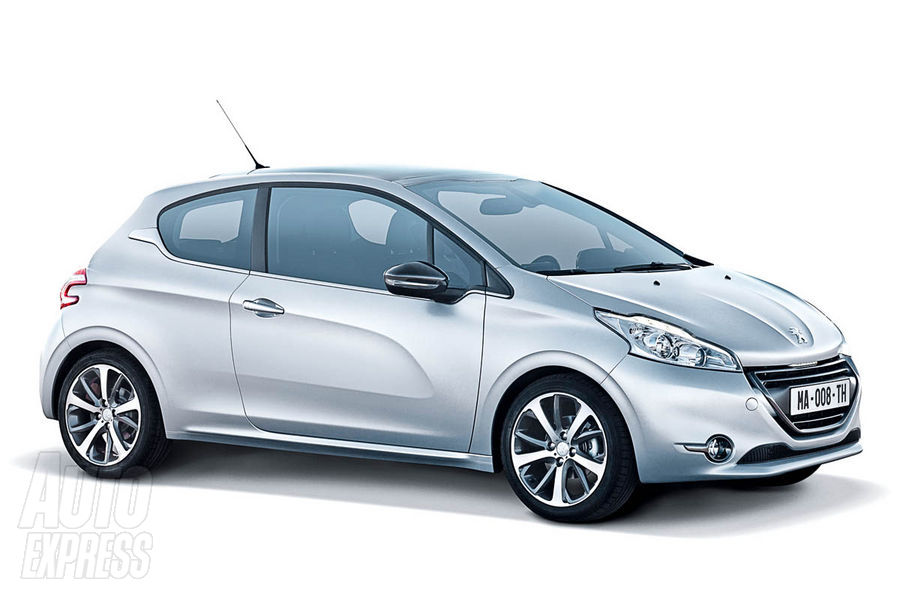
New Peugeot 208


In spite of Peugeot’s rich history in the small car market, the 208 is the company’s most radical reinvention of the supermini ever. 

The new car is smaller, lighter, cleaner and more stylish than the 207, bringing improvements in every possible way. And we have the first official pictures and 
all the details that matter.


Since the SR1 concept debuted at the 2010 Geneva Motor Show, Peugeot has set about pursuing a new design direction, improving quality and reintroducing the sporty driving experience of old back into its products. And the clean sheet approach to the 208 is the culmination of that process.

Although the three and five-door are based on the same mechanicals, they have been designed from the outset as separate entities. In profile, 
the scallop taken from the side of the three-door begins at the tail-lights and curves down along the side of the car.


The five-door uses a less dramatic feature line that runs along the sill and turns upwards behind the front wheel.

Other differences include bars in the three-door’s grille – the five-door gets mesh – and a continuation of the chrome 
window trim into the C-pillar, which is a nod to the 205. 


Both cars get the floating grille treatment already seen on the 508, as well 
as foglamps set flush into the 
front bumper and boomerang rear lights complete with 
claw-like graphics.

Inside, the revolution continues. A large central touchscreen dominates the 
interior on all but the entry-level 208. This controls the 
entertainment and navigation functions, plus the vehicle dynamics. Owners wanting to personalise their car can get the screen trimmed in different ‘skins’. 


So it’s no surprise that the 
layout and materials bear no resemblance to the past, with a glossy finish on the console and soft-touch materials throughout. The steering wheel has shrunk, too, and you view the instrument cluster over the top of it, instead of through it, which Peugeot says helps drivers focus on the road.

It’s not only the steering wheel that’s smaller, either – the whole car is. It’s 7cm shorter and 1cm lower, but the wheelbase is the same as the 207’s. Incredibly, the cabin is more spacious, with 5cm extra legroom, plus the boot is 15 litres bigger, at 285 litres – that’s still 10 litres less than in a Ford Fiesta.


The more compact dimensions mean dramatic weight savings. On average, the 208 is 110kg lighter than the 207, with the base car weighing only 975kg. Plus, the shape, optimised in the wind 
tunnel, is more aerodynamic than ever – and fuel economy 
will be impressive as a result.

Full engine details have yet to be released, but CO2 emissions have fallen by 34g/km on average compared to the 207. And none of the five diesels, which range from 89bhp to 108bhp, emits more than 99g/km.

Toyota Yaris 2011


Toyota boldly claims that the new car offers higher interior quality, sharper dynamics and more space than ever, but what instantly grabs you is the new exterior design. The anonymous styling of old has vanished, replaced by a pair of angular headlights, a double concave grille, and subtle chrome trim which all reflect the latest family look.


The newcomer has gone up a size too, as it’s 100mm longer than its predecessor. Half of the extra length has been used to extend the wheelbase, freeing up passenger space, while the rest means that the boot is 25 per cent longer than before. It will swallow a decent 286 litres of luggage.


The existing engine line-up has been carried over, so there are two petrols to choose from - a 1.0-litre three cylinder with 68bhp and the 1.33-litre unit tested here. Completing the line-up is an 89bhp 1.4-litre diesel, which will also be the most efficient version until a hybrid model arrives next summer, emitting just 104g/km of C02.

Of the three, the 1.33-litre petrol is expected to make up around half of all sales, and with 98bhp and 125Nm of torque, there’s enough shove to keep pace with town traffic.


Progress is smooth and hushed at city speeds but, as peak torque arrives at 4,000rpm, the engine note becomes more strained once you reach the motorway. The manual gearbox could be more precise too, and while the optional Multidrive S automatic is smoother, it can get noisy unless you change gears yourself using the steering wheel-mounted paddles.


Toyota’s engineers have focussed on improving the car’s agility, ride and handling balance, and to achieve this plenty of thought has been put into saving weight. So despite going up in size, the new Yaris is 20kg lighter than the outgoing model, with thinner seats, aluminium suspension components, and a stiffer body shell all aiding the slimming process.


European versions also get a bespoke ride and handling setup, with retuned suspension bushes and dampers, and a quicker steering rack to help improve road holding and ride comfort.


Unfortunately the extra attention hasn’t had the desired effect – even on our smooth test route the ride felt firm, bouncing and jarring over imperfections. The electrically-assisted steering is light and easy to use, but provides little feedback, and the chassis gets flustered easily by quick changes in direction.

On the inside, the newly driver-oriented cabin and simple, unfussy dash layout marks a big step forward, with an integrated touchscreen system at the heart of the design. It’s an impressive piece of kit, and features Bluetooth, a reversing camera and picture viewer as standard on all but the base-spec car.
Related Posts Plugin for WordPress, Blogger...