Nuffnang Add

Showing posts with label bhp. Show all posts

Thursday, March 24, 2016

New Mazda SUV CX-5


Mazda has taken the wraps off its Land Rover Freelander rival – which will sit below the full-size CX-7 SUV – and says it will be the first car to use its SKYACTIV eco technologies. This means low CO2 emissions of less than 120g/km.


The styling is inspired by the Minagi concept – which debuted at March’s Geneva Motor Show – with the design team doing a good job of retaining that car’s neat look.

The CX-5 showcases Mazda’s new KODO design language, which incorporates a fresh family face and more purposeful stance, which bosses claim it will be extended to the car’s cabin.


Under the bonnet is a choice of the new SKYACTIV-G 2.0-litre petrol engine and a SKYACTIV-D 2.2-litre diesel. The latter comes in two power outputs, with the lesser 173bhp option claiming the lowest CO2 figure – although this refers only to the front-wheel-drive version with a manual gearbox.


In comparison, the most efficient two-wheel-drive VW Tiguan provides 64bhp less power and still puts out 139g/km. Among the other SKYACTIV tweaks are new manual and automatic transmissions, while the body and chassis have been developed to be as light and rigid as possible.

VW Golf Cabriolet


The Volkswagen Golf Cabriolet is back! After an absence of almost a decade, the popular convertible has returned and slots below the folding hard-top Eos in the range.


For the first time on an open-top Golf, this model doesn’t get any visible roll-over hoops. Instead, it gets the pop-up system featured in the Eos that activates if the car detects it’s about to flip over. As a result, the design of the car is not as fussy, and it looks a lot more upmarket.


The front and rear lights are LED units as standard which adds to the stylish design, while the canvas roof can be lowered in only 9.5 seconds while driving up to speeds of 18mph – if you are interested in practicality, it's worth noting that there’s still a surprisingly spacious 250-litres boot when it is folded away. 


As well as the practical boot, the Golf Cabriolet boasts the same wheelbase as the Eos which makes seating four tall adults a breeze. Rear seats are comfortable, if a little exposed to the elements with the roof down!


Inside, the cabin layout is identical to the hard-top Golf but some of the materials have been made slightly more durable to deal with the elements. 


The drive will be familiar to Golf owners too. Despite losing the roof, Volkswagen engineers have reinforced the window-frame, cross-members, side-panels and doors to make the drive as sharp as possible.


The steering is precise, responsive and despite slightly more flex in the chassis the newcomer grips and handles just as well as its hard-top sibling. 


On the move, the car also feels surprisingly refined. The fabric roof has an extra insulating layer and the window and door seals have been improved for what Volkswagen claims is class-leading quietness - and on the evidence it’s hard to argue.


Even with the roof down there's very little buffeting or wind noise around the front seats.. You can easily hold a conversation at motorway speeds.


Over bumpy surfaces, the Golf Cabriolet performs well, with only large imperfections unsettling the suspension. The car feels stable, particularly through long, sweeping corners.


On top of that, the 157bhp 1.4-litre TSI unit fitted to our model is smooth, quiet and provides plenty of punch - particularly in the middle of the rev range.


The 1.4TSI is relatively economical, but buyers with an eye on fuel economy can also choose between a 104bhp 1.2-litre TSI, or 1.6-litre TDI engine.


Later 2.0-litre TSI and 2.0-litre TDI engines will be added to the range, boasting 207bhp and 138bhp respectively.


So is this Golf Cabriolet a worthy successor to the legendary machines that came before it? In a word, yes. It's better built, more neatly styled and above all, more luxurious than ever before.

BMW M3 pick-up


Would you believe it! BMW has revealed this pick-up truck version of the V8-powered M3.


It uses the same 4.0-litre engine as the standard machine, sending 414bhp and 400Nm of torque straight to the rear-wheels via a six-speed manual gearbox. Final performance stats haven’t yet been released, but BMW claims that despite the new bodystyle the newcomer has reached 186mph in testing.

There are performance advantages too, as the M3 pick-up has shed 50kg from its kerbweight – particularly over the rear axle, making for a more lively handling experience. The large loading bay doesn’t increase aerodynamic drag either.


Despite its utilitarian appearance, the cabin is similarly well appointed to that of the standard M3, featuring M-badged leather bucket seats, steering wheel and gearlever. It also comes with a removable targa roof that cuts an extra 20kg and lowers the centre of gravity when it is removed.


It’s more practical than the standard saloon too, and although the low suspension and 18-inch alloy wheels mean it won’t quite be at home on the farm, the M3 pick-up’s load capacity has been raised to 450kg and a trailer tow hitch – for caravans, boats, or other trailers – is an M3 first. It’s lined with lightweight aluminium, and BMW claim there’s enough space for 20 full-sized golf bags.


BMW has gone through all the necessary requirements to make the pick-up road legal, but there’s still no word yet of when a full production version will join the rest of the M3 range, although it’s unlikely to be before April 1st 2012 to move upmarket.

Tuesday, March 22, 2016

Mercedes SLC


These are the pictures that prove Mercedes is working on a baby brother to the SLS AMG supercar. Thought to be called the SLC, this early protoype uses an SLS body with experimental running gear underneath. 


It’s given away by the shorter wheelbase and heavy cladding at the front and rear, which is likely to hide some of the production model's altered styling. Earlier this year Mercedes Head of Design, Gordon Wagener, told us to expect a dynamic design inspired by the SLS.

The SLC will be front-engined but the SLS's 6.2-litre V8 will most likely be replaced by an all-new turbocharged 4.0-litre V8. Mercedes may offer a V6 model, too, using the 3.5-litre unit from the SLK.


Expect to see a power output of around 500bhp in the flagship variant, which will allow the SLC to accelerate from 0-62mph in just over four seconds.  


While the SLS is going after models like the Ferrari 458 Italia and Aston Martin DBS, the SLC will be far cheaper with a price-tag closer to nearly RM500,000 (£80,000).

We should get our first glimpse of the production-ready Mercedes SLC in 2014, before the car goes on sale early in 2015.

Nissan DeltaWing


Nissan has become part of the radical DeltaWing racing program that will see this rocket-shaped car competing at the 2012 Le Mans 24 Hours race. 


Instead of opting for out-right speed the DeltaWing concentrates on a balance of speed and efficiency. With a turbocharged 1.6-litre four-cylinder under the bonnet and that strange shape, the DeltaWing is about 50 per cent lighter and 50 per cent more aerodynamic than a traditional Le Mans car.


Video: Watch footage from the launch of the Nissan DeltaWing


The engine itself is expected to produce around 300bhp which should propel the DeltaWing to a top speed of around 186mph. 


The DeltaWing won’t be eligible to win at Le Mans because it doesn’t conform to the existing regulations, but Nissan is hoping to put in lap times somewhere between the LMP1 and LMP2 cars. 


Nissan is a very innovative, forward-thinking company prepared to take a risk or two. And exactly the same applies to Nissan DeltaWing. The involvement in the project shows the boldness of Nissan from an engineering and innovation mindset.

Thursday, February 25, 2016

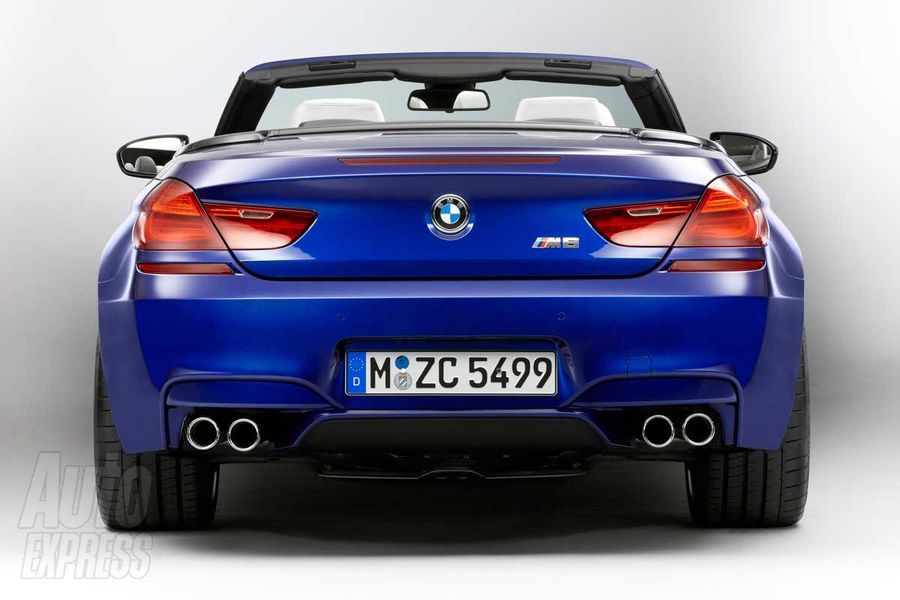
BMW M6 2012


BMW has released first official pictures of the M6 Coupe and Convertible. Both cars are fitted with a 552bhp 4.4-litre twin-turbo V8.


The engine and seven-speed double-clutch gearbox are lifted straight from the M5 saloon. They fire the lighter M6 Coupe from 0-62mph in 4.2 seconds – two-tenths faster than the M5 and on par with the XKR-S – and from 0-124mph (200kph) in 12.6 seconds. The Convertible takes 4.3 and 13.1 seconds.


Thanks to the addition of direct-injection, turbocharging and stop-start, the Coupe and Convertible claim a huge 30 per cent improvement in efficiency over the old 5.0-litre V10 M6. BMW says they return 28.5mpg and 27.4mpg respectively.


The 6 Series’ styling is beefed up with a lower and more angular bodykit, flared wheelarches and optional 20-inch alloys. Four tailpipes poke out either side of the rear diffuser, and M-branded gills double up as indicators.


The Coupe has a unique, stepped, carbon fibre roof, while both cars have aluminium doors and bonnets, front side panels made of thermoplastic and fibreglass bootlids to save weight.


There’s even an element of practicality, with usable rear seats, while the boot provides 460 litres of space in the Coupe and 350 litres in the Convertible (or 300 litres with the roof down).


Inside, there’s carbon fibre trim, a specially designed steering wheel and sports seats to match the aggressive exterior. Plus, the handling is boosted by three-mode adaptive dampers and a mechanical limited-slip diff on the rear axle.

Two M buttons on the wheel can be used to store favourite settings for suspension, steering, stability control and gearbox response, while carbon-ceramic brakes will be an option.

Wednesday, February 24, 2016

Lamborghini Super Trofeo LP570-4


Lamborghini Super Trofeo, Lamborghini reveals ultra-light Super Trofeo Stradale at the Frankfurt Motor Show.

The Gallardo is going out with a bang. With a replacement on the horizon, Lamborghini has revealed the most extreme version of its ‘baby’ supercar: the LP570-4 Super Trofeo Stradale.


It’s based on the Blancpain Super Trofeo racer, and features the same V10 powerplant, delivering 570bhp and 540Nm of torque. Thanks to lightweight carbon fibre construction, the Stradale weighs 70kg less than a standard LP 560-4, at 1,340kg.


As a result, it sprints from 0-62mph in only 3.4 seconds and goes on to hit a 198mph top speed.


The newcomer is finished in traditional Rosso Mars racing red, and set off by the same rear spoiler as the racing car, plus forged high-gloss black 19-inch wheels and a carbon fibre diffuser. Inside, the black and red theme continues with Alcantara on the dash and parts of the seats. Contrasting red stitching is used throughout the cabin, alongside a black suede steering wheel.


As with the competition car, the Stradale has the robotised e-gear six-speed transmission, complete with Thrust Mode to allow a racing start off the line. Permanent all-wheel drive and Pirelli P Zero Corsa tyres give maximum grip.


Only 150 Stradales will be built, and buyers will be able to personalise their example with a roll cage, four-point seatbelts and fire extinguisher. Prices are likely to start at more than £180,000.
Related Posts Plugin for WordPress, Blogger...