Nuffnang Add

Showing posts with label kereta. Show all posts

Thursday, March 24, 2016

BMW i3 and i8


The stars of BMW’s future have finally arrived. These are the first official pictures of the founding members of the eco-friendly ‘i’ sub-brand – the family hatch all-electric i3 and the hybrid supercar i8. 


Both models are built using BMW's LifeDrive construction. This essentially splits the car into two separate parts – an aluminium Drive section which houses the battery, suspension, and crash structures and a Life passenger section made from CFRP – a material at least as strong as steel but 50 per cent lighter. 


By using LifeDrive BMW claims to have cancelled out the weight penalty associated with the heavy battery packs electric cars must carry and the evidence suggests they're right. The i3 is taller and wider than a VW Golf, albeit around 30cm shorter, but it weighs just 1250kgs – that’s around 50kgs less than the lightest Golf. 


The ‘i’ cars come with a few subtle styling updates to mark them out as eco-specials. 

A blue ring now circles the badge, and the kidney grilles now have a matching blue background. BMW’s double circle headlights are replaced by U-shaped LEDs and both models take on a more curvaceous design than the firm's conventionally powered models.


The tall hatchback i3 gets a 168bhp electric motor mounted above the rear axle and delivers power to the rear wheels. Acceleration from 0-62mph takes 7.9 seconds and the i3 is electronically limited to 93mph. 


Power is drawn from a lithium-ion battery mounted underneath the floor which is fitted with an integrated liquid cooling system to keep the battery at the optimal temperature. In winter, the battery can also be heated by the same method. A full recharge from a standard socket takes six hours, and a quick charge can fill the battery to 80 per cent in just one hour. 


On a full battery the i3 manages a 140-mile range according to the US economy drive-cycle and BMW claims that translates to an everyday range of 80-100 miles. Customers who are looking for more flexibility can specify an optional range-extending engine called REx that will be mounted alongside the electric motor over the rear axle. 


Unlike this system – which is only ever used to top up the batteries – the engine in the i8 actually provides drive to the rear wheels directly. In the case of the hybrid supercar it’s a 3-cylinder 1.5-litre turbocharged unit with 217bhp which works in tandem with the same electric motor from the i3 to power the rears – though in this instance it produces just 128bhp for a total of 345bhp. 


With both units working together, the i8 can accelerate from 0-62mph in 4.6 seconds and on to an electronically limited top speed of 155mph. Alternatively, the i8 can run on electric power alone for up to 20 miles. Official fuel consumption stands at around 104mpg and CO2 emissions are just 66g/km. BMW admits that an everyday figure of around 50mpg is more likely though. 


BMW is still referring to both these cars as concepts but what you see here is essentially what you get when they arrive on the roads in 2013.

Shelby Tuatara


Move over Bugatti! Shelby Supercars has released new pictures and named its brand-new contender in the supercar class - the Tuatara.

The US firm is a former holder of the world's fastest production car title - that was with its 1,183HP SCC Ultimate Aero TT that recorded a top speed of 257 mph. The 258mph Bugatti Veyron Super Sport topped that, but now Shelby is back for revenge


Styled by Saab's current design boss, Jason Castriota, the Tuatara will use a 1,331bhp twin-turbo 7.0-litre V8, sending power to the rear wheels through a seven-speed manual or a seven-speed robotised manual gearbox. Performance figures are yet to be released but the aim is clear - to surpass the Super Sport's 258mph top speed.

the name Tuatara actually refers to a type of reptile, native to New Zealand. It supposedly has the fastest evolving molecular structure in nature, something that the company's owner, Jarod Shelby, feels it shares with his carbon-fibre-bodied supercar.


"Most manufacturers essentially use the same basic model and body shape for up to 10 years, while only making small refinements to it each year. After only three years in production with the Ultimate Aero, SSC's Tuatara is about to monumentally evolve in the areas of sophistication, design, aerodynamics and shear all‐around performance. We felt that the fastest evolving DNA was a perfect definition of SSC's latest project.," he said.

There's no word on price, specification or release date yet for the Tuatara, but expect to see Shelby take a crack at the speed record before the end of the year.

Half Car Half Cycle

(Need malay translation) 


Separuh kereta separuh skuter? Dikenali sebagai Land Glider keluaran syarikat gergasi automotif Jepun, Nissan. Lebarnya hanya setengah dari saiz kereta sedan biasa.


Kelajuan maksimum Land Glider ini adalah 100km/j. Walaupun dipandu laju, sistem pintar yang terdapat pada kereta ini dapat membantu pemandu mengesan risiko pelanggaran dan mampu untuk mengelakkannya dari berlaku.


Dengan adanya 4 roda seperti sebuah kereta normal, ianya juga dapat mengambil selekoh dengan baik.


Ruang dalamannya hanya ada dua tempat duduk. Satu di hadapan dan satu di belakang. Papan pemuka dan hiasannya adalah seperti kokpit pesawat peribadi.

Tuesday, March 22, 2016

Honda CR-Z Type R 2010


From CR-X then C-RX Mondoe, then comes CR-Z! I love this car. Lets check it out! I get this article from my monthly subscribe's online magazine, Auto Express!

From hybrid to high-performance! Honda’s new petrol-electric coupe, the CR-Z, is being readied for Type R treatment, and Auto Express can bring you the first exclusive images of how the hot new model is shaping up.


Revealed in production trim at this January’s Detroit Motor Show, the CR-Z has already caused quite a stir by marrying a sporty three-door body with a fuel efficient hybrid powertrain – creating the world’s first truly desirable sports hybrid in the process. But the Japanese firm is going one step further with this stunning Type R version, which boasts a raft of head-turning design cues, and a more powerful hybrid powertrain under the skin.
A tarmac-hugging bodykit will create a clear definition between the standard car and this high-performance variant, and includes daytime running lights in the front apron and a black rear diffuser with integrated exhaust pipes. But it’s the colour scheme that will be most recogniseable to Type R fans.
A black bonnet, wing mirrors and wheels set against an alpine-white paint scheme will make the CR-Z stand out in a crowd. Blacked-out A-pillars are a new styling cue - giving the impression of a glass area that wraps around the car.
The standard CR-Z uses a 102bhp 1.5-litre engine coupled to a 20bhp electric motor for a total output of just 122bhp - but the Type-R is set to offer much more than that! Mugen, Honda’s official tuning arm, is reportedly being lined-up to work its magic on the CR-Z and boost its performance credentials. There had been rumours that a reworked version of the Civic Type R’s 2.0-litre four-cylinder engine could make it into the CR-Z Type-R, but because the coupe has been designed as a hybrid from the outset, a petrol-electric powertrain is a must.
The front-wheel drive layout and six-speed manual gearbox will remain, but expect the naturally-aspirated 1.5-litre engine to be cranked up to around 150bhp and mated to a larger 50bhp electric motor. The combined output of 200bhp will move the Type-R into serious performance territory with a 0-60mph time of close to six seconds, three seconds faster than the 122bhp CR-Z, and a top speed of 140mph.

Kereta Flinstone Yabba Dabba Doo!


(Malay translation needed) Niat seorang pemilik kenderaan ala "flinstone" untuk memulakan pemanduan terpaksa dibatalkan kerana pihak berkuasa memutuskan kereta zaman batu miliknya itu tidak selamat untuk dipandu.


Menggunakan bingkai kayu dan alas tempat duduk berlapikkan corak harimau bintang, Sebastian Trager mereka bentuk kenderaan menyerupai kenderaan yang menggunakan kuasa tolakan kaki seperti di dalam rancangan TV popular "Flinstone".


Bagaimanapun, hasil modifikasi moden, kenderaan yang dicipta oleh jurutera Jerman itu tidak memerlukan kayuhan kaki kerana ia dilengkapi enjin 1.3 liter di dalam roda bahagian hadapan kenderaan.


Trager telah memohon lesen untuk memandu kereta zaman batu ciptaannya itu, namun pihak berkuasa Jerman memutuskan ia sebagai tidak selamat untuk berada di atas jalanraya.

"Kami telah meniru dengan teliti. Saya bekerja di dalam pembinaan kereta dan gemar dengan kereta, jadi saya tahu ia sangat selamat" jelas Trager.


"Tapi ketika kami terpaksa mengisi salah satu bahagian dalam borang pendaftaran berhubung jumlah lampu, cermin dan penyapu air, kami berputus asa kerana ia langsung tiada cermin"

"Kami membawanya untuk dipamerkan kepada orang ramai, nampaknya semua orang sukakannya".

Thursday, February 25, 2016

Kiat Esemka dari Indonesia


SOLO - Kereta prototaip buatan pelajar-pelajar kejuruteraan Indonesia telah mendapat sambutan menggalakkan daripada beberapa pegawai kanan pentadbiran negara ini yang mahu membelinya.


"Sepuluh buah kereta Kiat Esemka dihasilkan di bengkel Kiat Motor di bandar ini," kata pemilik bengkel tersebut, Sukiyat.

Model pertama dikeluarkan pada 2009 tetapi laporan media menyatakan Datuk Bandar Solo, Joko Widodo telah membeli sebuah kereta tersebut untuk kegunaan pejabat.


Beberapa pegawai lagi mula menunjukkan minat untuk membeli kereta tersebut yang dibina untuk lapan tempat duduk dan empat tempat duduk.

Kereta tersebut mendapat pujian Presiden Susilo bambang Yudhoyono.


Menurut Sukiyat: "Buat masa ini, ia mengambil masa dua hingga tiga bulan untuk menghasilkan sebuah kereta."

Sebanyak 80 peratus komponen kereta itu dibuat di Indonesia dan kos pengeluaran pada skala kecil ialah di antara AS$8,200 (RM25,797) hingga AS$10,400 (RM32,718). 


Kereta itu dikeluarkan sebagai satu latihan untuk pelajar sekolah tinggi vokasional dan bengkel itu belum bersedia untuk membuat pengeluaran pada skala besar-besaran.

Wednesday, February 24, 2016

Toyota Passo de Tea Time


The Toyota Passo de Tea Time was unveiled during the recent 2011 Tokyo AUTO Salon.Very unique and purposely produced to showcase Toyota's original accessories. The powerplant still the 1.0l engine


The Car Spec
  • Based car grade 1.0L 2WD
  • Vehicle type DBA-KGC30-AHEAK
  • Vehicle weight 950kg
  • Engine type 1KR-FE
  • Total cubic displacement 0.996L
  • The highest output 51 (69) /6.000kW (PS) /r.p.m.
  • Largest torque 92 (9.4) /3,600N m (kgf m) /r.p.m.
  • Fuel feeder electronic control type fuel injector (EFI)
  • Vehicle size (total length × full × total height) 3,695mm×1,685mm×1,535mm
  • Wheel base 2,440mm
  • Riding in a car fixed capacity 5 people
  • Drive system nosewheel drive system
  • Transmission CVT

Toyota Yaris 2011


Toyota boldly claims that the new car offers higher interior quality, sharper dynamics and more space than ever, but what instantly grabs you is the new exterior design. The anonymous styling of old has vanished, replaced by a pair of angular headlights, a double concave grille, and subtle chrome trim which all reflect the latest family look.


The newcomer has gone up a size too, as it’s 100mm longer than its predecessor. Half of the extra length has been used to extend the wheelbase, freeing up passenger space, while the rest means that the boot is 25 per cent longer than before. It will swallow a decent 286 litres of luggage.


The existing engine line-up has been carried over, so there are two petrols to choose from - a 1.0-litre three cylinder with 68bhp and the 1.33-litre unit tested here. Completing the line-up is an 89bhp 1.4-litre diesel, which will also be the most efficient version until a hybrid model arrives next summer, emitting just 104g/km of C02.

Of the three, the 1.33-litre petrol is expected to make up around half of all sales, and with 98bhp and 125Nm of torque, there’s enough shove to keep pace with town traffic.


Progress is smooth and hushed at city speeds but, as peak torque arrives at 4,000rpm, the engine note becomes more strained once you reach the motorway. The manual gearbox could be more precise too, and while the optional Multidrive S automatic is smoother, it can get noisy unless you change gears yourself using the steering wheel-mounted paddles.


Toyota’s engineers have focussed on improving the car’s agility, ride and handling balance, and to achieve this plenty of thought has been put into saving weight. So despite going up in size, the new Yaris is 20kg lighter than the outgoing model, with thinner seats, aluminium suspension components, and a stiffer body shell all aiding the slimming process.


European versions also get a bespoke ride and handling setup, with retuned suspension bushes and dampers, and a quicker steering rack to help improve road holding and ride comfort.


Unfortunately the extra attention hasn’t had the desired effect – even on our smooth test route the ride felt firm, bouncing and jarring over imperfections. The electrically-assisted steering is light and easy to use, but provides little feedback, and the chassis gets flustered easily by quick changes in direction.

On the inside, the newly driver-oriented cabin and simple, unfussy dash layout marks a big step forward, with an integrated touchscreen system at the heart of the design. It’s an impressive piece of kit, and features Bluetooth, a reversing camera and picture viewer as standard on all but the base-spec car.

Subaru XV


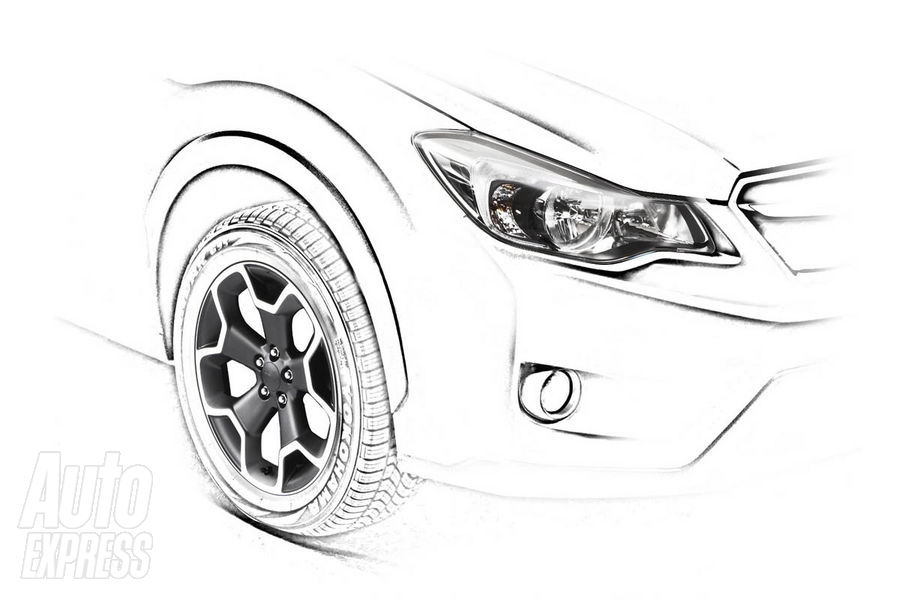
Subaru is preparing to unveil the all-new XV crossover during September’s Frankfurt Motor Show.


The model was previously shown in concept form at the Shanghai Auto Show earlier this year and Subaru’s designers claim to have stayed true to the look of that car. The teaser shot clearly shows the same blistered wheel arches, prominent grille and headlights as the concept. 


When it goes on sale early next year, the XV will go head-to-head with Nissan’s Qashqai and looks set to replace the Subaru Forester in the line-up.  The firm also claims it will bring a new level of “engineering excellence” to the segment. 


Unlike Nissan’s crossover the XV will be four-wheel drive only and it will come with a range of engines including an entry-level 1.6-litre petrol and a 2.0-litre diesel unit.
Related Posts Plugin for WordPress, Blogger...